Grey Cardboard: The Complete Guide for Packaging Buyers
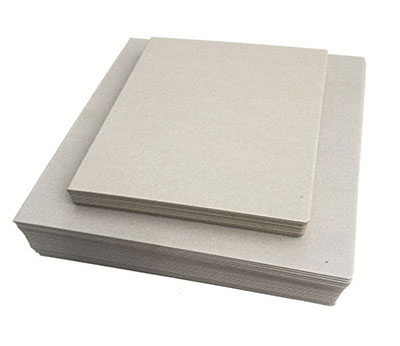
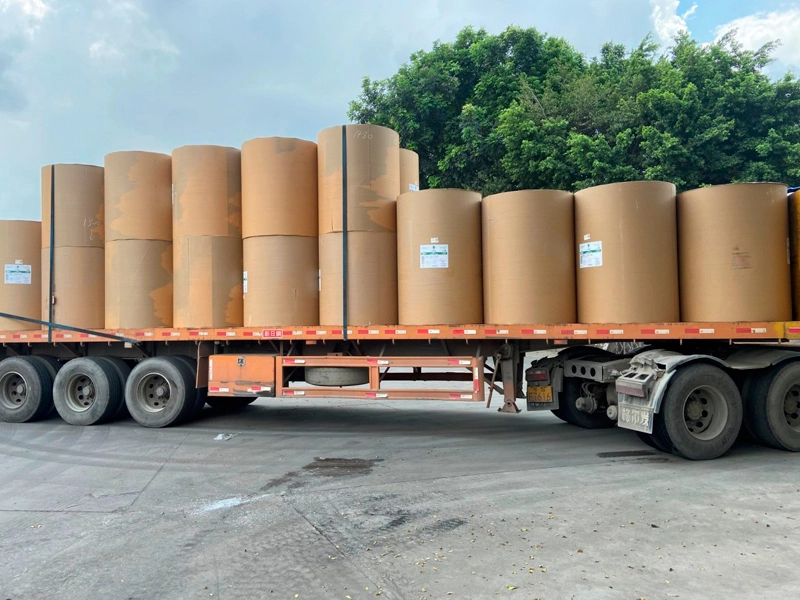
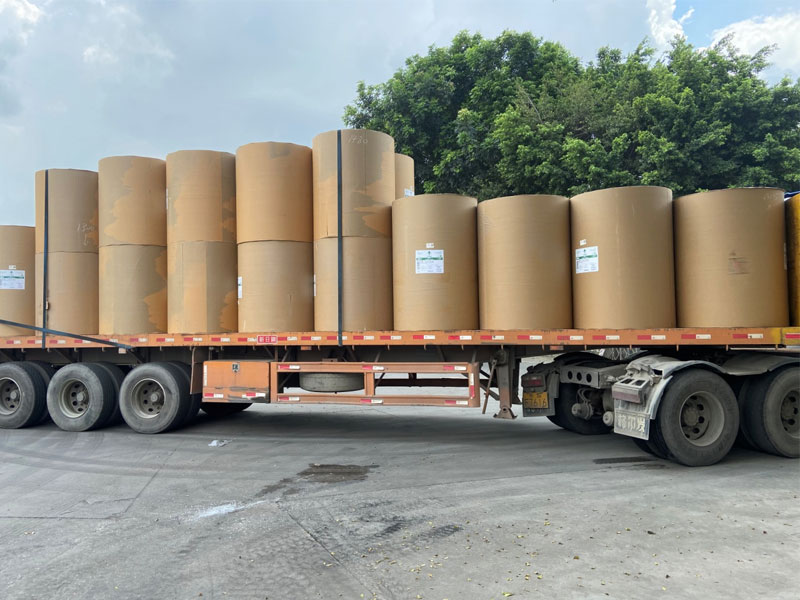
Two numbers decide most grey cardboard orders: thickness in millimetres and grammage in grams per square metre. They move together — 1 mm sits at roughly 610–625 gsm — and every band has a job it does well and a point where it stops working. Grey cardboard, also sold as greyboard or grey chipboard, is a single-layer board built from recovered fibre. It is the rigid core inside rigid gift boxes, hardback book cases, jigsaws, ring binders and display stands. It is not a printing surface: the grey face is normally wrapped with printed paper, cloth or film. This guide covers the thickness and grammage bands we hold, the application each band suits, how greyboard compares with white cardboard and duplex board, what humidity does to it inside a sea container, and the six details to send with an enquiry.
What Grey Cardboard Is — and Where It Sits
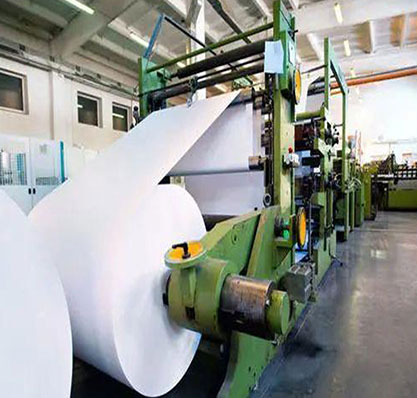
Greyboard is made on a multi-cylinder machine from mixed recovered paper, without bleaching. The grey colour is the fibre mix showing through, not a coating or a dye. That single fact explains most of its commercial behaviour: it is the cheapest way to buy stiffness per kilogram, and it is the wrong material wherever the surface has to be seen.
Its density sits at roughly 0.6–0.65 g/cm³ across the range, which is why a 2 mm sheet weighs about 1.2–1.25 kg/m². Compare that with corrugated board, which buys thickness with air: a B-flute sheet is 3 mm thick but weighs far less, because it cushions rather than resists bending. If your requirement is "does not flex under its own weight across a 300 mm span", that is greyboard's job. If the requirement is "survives a drop", that is corrugated.
Material
Structure
Surface
What it is used for
Grey cardboard
Single ply, recovered fibre
Grey, uncoated, both sides
Structural core, wrapped or hidden
White cardboard
Bleached pulp, single or multi ply
White, printable
Visible outer surface, direct print
Duplex board
Two layers, coated top over grey back
Coated white one side
Folding cartons, printed one side
Corrugated board
Fluted medium between two liners
Liner grade dependent
Shipping cases, cushioning
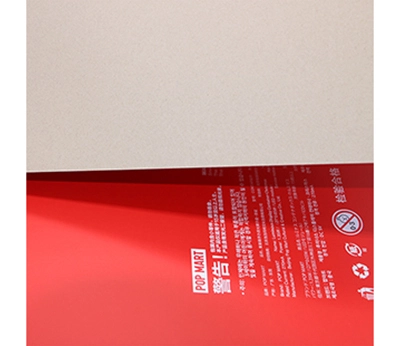
The practical consequence: greyboard carries the load, the printed sheet carries the brand. Almost every rigid box on a retail shelf is a greyboard core wrapped in printed paper — a construction that lets the box be 2 mm thick and still hold its edges. Where the surface has to be printed and left visible, go to white cardboard or duplex board instead.
The Full Thickness and Grammage Table
Below is the range we hold as stock bands, measured in micrometres and quoted with calliper tolerance. Read the tolerance as a share of the nominal thickness: ±5 µm on a 1 mm grade is ±0.5%, while ±15 µm on the 4 mm grade is ±0.375%. The bands are not evenly spaced, because buyers do not order evenly — the clusters sit where rigid box, bookbinding and display work actually fall.
Grammage (g/m²)
Thickness (µm)
Thickness (mm)
Moisture content (%)
170–180
280 ±5
0.28
8.0 ±1.5
240–250
400 ±5
0.40
8.0 ±1.5
290–300
480 ±5
0.48
8.0 ±1.5
340–350
560 ±5
0.56
8.0 ±1.5
385–400
640 ±5
0.64
8.0 ±1.5
435–450
720 ±5
0.72
8.0 ±1.5
485–500
800 ±5
0.80
9.0 ±1.5
610–625
1000 ±5
1.00
9.0 ±1.5
685–700
1120 ±5
1.12
9.0 ±1.5
885–900
1440 ±5
1.44
9.0 ±1.5
985–1000
1600 ±5
1.60
10.0 ±1.5
1185–1250
1920–2000 ±5
1.92–2.00
10.0 ±1.5
1850–1900
3000 ±10
3.00
12.0 ±1.5
2450–2550
4000 ±15
4.00
14.0 ±1.5
Two things in that table matter more than the rest. First, the moisture band widens as the board gets thicker: thin grades are specified at 8%, the 4 mm grade at 14%, all with the same ±1.5 point spread. A 4 mm sheet therefore carries far more water per square metre than a 1 mm sheet, and takes longer to reach equilibrium with the air in your converting hall. Second, the top two bands carry wider calliper tolerance, because calipering a 3–4 mm board down to ±5 µm is not a realistic commercial promise. If your assembly jig is cut to a fixed depth, design against the tolerance, not the nominal figure.
Every figure above is taken from the grade data sheets published on our product pages — for example the 1 mm thick cardboard page carries the full low-range table. Confirm the band on the data sheet for the exact grade you are ordering before you cut tooling.
To check a delivery against the table, use a dead-weight micrometer rather than a vernier: board is compressible, and a spring gauge reads thin if you squeeze. Take five readings across the sheet — centre plus four points roughly 50 mm in from each corner — and compare the average with the nominal figure, not the single lowest reading. Edges run thin because the trim exposes the drier part of the web, so a sheet that measures low only at the trim is usually within specification.
Which Thickness for Which Application
The rule that saves the most rework: specify against the wrapped thickness, not the board thickness. Lamination adds roughly 0.1–0.2 mm per face once adhesive and paper are counted, so a box specified as a "2 mm wall" is usually built on a 1.5–1.75 mm core. If you buy board first and design the box second, the wall comes out oversize.
Thickness band
Grammage
Typical use
Where it stops working
0.28–0.48 mm
170–300 gsm
Frame backing, hang tags, box inserts, laminated cores
Anything freestanding; edge will curl when wrapped wet
0.56–0.80 mm
340–500 gsm
Notebook covers, folders, puzzle backing, small rigid boxes
Boxes over ~200 mm span; visible springback on lids
1.00–1.12 mm
610–700 gsm
Rigid gift boxes, hardback cases, board-game boards
Large-format display; needs corner stay support
1.44–1.60 mm
885–1000 gsm
Premium rigid boxes, photo albums, jigsaw boards
Deep-draw wrapping without pre-creasing
1.92–2.00 mm
1185–1250 gsm
Heavy rigid boxes, furniture backing, sample cases
Hand-finished short runs; hard to cut cleanly by knife
3.00 mm
1850–1900 gsm
Display stands, architectural models, heavy dividers
Standard die rules; needs heavier rule and blanking
Working from the bands in detail: for gift boxes between 150 and 250 mm, 1.5–2.0 mm is the usual wall, and the choice inside that window is driven by how the box is closed. A magnetic flap needs more stiffness than a lift-off lid because the flap is unsupported along one edge. For bookbinding, the board is chosen against book format: a 1 mm board is right for an A5 case, and a 2 mm board on the same format makes the cover feel like a box rather than a book. For jigsaw and board-game boards, 1.44–2.0 mm keeps the board flat after the printed sheet is glued to one face — that is the case where a moisture-tolerant grade earns its price.
Each band maps to a grade page with its own data sheet — the 2mm grey cardboard sheets page carries the 1.92–2.00 mm heavy rigid-box band, and the 3 mm and 4 mm grades have their own pages on the same range. Sheet sizes are covered in the quotation section below.
Grey Cardboard vs White Cardboard vs Duplex Board
The three are not substitutes; they solve different halves of the same problem. Greyboard buys rigidity per unit cost and gives up the surface. White cardboard buys the surface and gives up cost. Duplex board sits between them, printing on one face and hiding the other.
Grey cardboard
White cardboard
Duplex board
Surface
Grey both sides, uncoated
White, coated or uncoated
Coated white top, grey back
Direct print
Technically possible; mottles, ink sits flat
Yes, offset and digital
Yes, one side only
Rigidity at equal thickness
Highest
Lower
Lower
Cost per m² at equal thickness
Lowest
Highest
Middle
Typical role
Core, wrapped
Visible printed panel
Folding carton
A rigid box usually needs two of the three: greyboard for the core and a printed wrap that may be duplex or lighter paper. A folding carton needs only one — duplex board — because the carton is folded from a single sheet and has no core. If you find yourself specifying greyboard and then printing it directly to save the wrap, check the artwork first: on an uncoated grey sheet, solid ink areas show the fibre texture and lighter tints read dirtier than the proof. Our duplex board guide covers the print-side behaviour in more detail.
Moisture, Warping and Container Shipping
Warping is the most common complaint on greyboard shipments, and it is almost never a board defect on its own. Board leaves the mill at 8–14% moisture content; it reaches equilibrium with whatever air surrounds it. A pallet loaded in a warm, humid plant, trucked to a cold port and then stowed in a container that swings between a cold hold and a hot deck will take on and give off water unevenly. The face that dries first contracts first, and the sheet cups.
The thick grades are more exposed, not less: a 4 mm sheet holds roughly four times the water of a 1 mm sheet per square metre at the same moisture percentage, so it moves more slowly and further out of step with the air around it. This is the case our high-density chip board guide deals with in detail; the short version is that density buys dimensional stability, and the price difference between a standard and a high-density grade is usually smaller than the cost of a rejected container load.
Three acceptance figures are worth writing into your purchase order, because they can be checked on arrival with basic workshop equipment:
Property
Specification
Why it is on the PO
Skewness
≤ ±3 mm
Out-of-square sheets jam automatic feeders and show at box corners
Internal bond
≥ 121
Predicts delamination when the board is cut or glued under load
Dirt count
≤ 50 pcs/m²
Visible specks telegraph through thin wraps and light-coloured paper
On the shipping side, what buyers typically specify is straightforward and does not depend on the mill: keep pallets stretch-wrapped with a top cap, add desiccant for long sea legs, stow away from the container doors, and let board acclimatise flat in the converting hall before cutting. How long that takes depends on thickness and the difference between outdoor and workshop humidity, so the practical answer is to measure the sheet, not to follow a fixed number of hours.
What to Specify Before You Request a Quote
Greyboard quotations go wrong for boring reasons: a thickness without a sheet size, or a size without a tolerance. Six inputs remove almost all of the back-and-forth.
Thickness or grammage. One is enough if you also say which one is fixed — a converter who needs 1.5 mm will accept a grammage band, but a buyer who needs 1200 gsm cannot accept a thinner sheet that happens to be cheaper.
Format. Sheets in 700×1000, 787×1092 or 889×1194 mm, or reels in widths from 700 to 1194 mm. State grain direction if the board will be folded or rolled.
Moisture requirement. Say whether the standard band is acceptable or you need the low end of it, which matters for humid destinations and for boards that will be glued to a printed face.
Surface. Grey one side or grey both sides, and whether the board will be seen at all. This decides whether you need a laminated grade or a plain one.
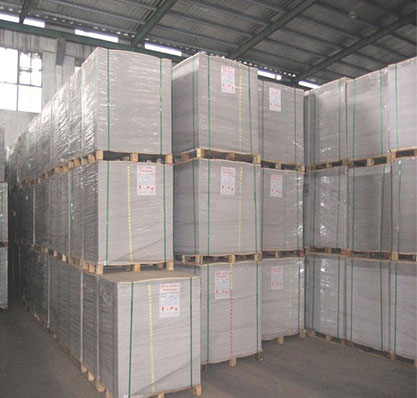
Packing. Pallet height and footprint, ream wrap, edge protection, and whether mixed pallets are acceptable.
Quantity band. A trial order and a monthly programme are quoted differently; say which one you are asking about.
Send those six and the answer is usually a specific grade rather than a question. You can reach the team through the contact form or by email at tina@xiaolongpackaging.com — thickness, sheet size and quantity in the first message gets you the closest stock grade rather than a range to choose from. The full grade list, including reel options, sits on the grey cardboard product page.
Grey Cardboard FAQ
Is grey cardboard the same as chipboard?
In trade use, mostly yes. Greyboard, grey chipboard and chipboard are sold as the same single-ply recovered-fibre board, though "chipboard" is also used for particle board in furniture. Specify grammage and thickness rather than the name — that removes the ambiguity. Our chipboard and cardboard comparison covers the naming overlap.
Is it grey cardboard or gray cardboard?
The same material. "Grey" is British usage and "gray" American; mills and traders use both, sometimes in the same catalogue. Spelling does not change the specification, the grade or the price.
Can grey cardboard be printed directly?
It can be printed, but the uncoated grey surface absorbs ink unevenly, so solids look patchy and fine detail fills in. For retail packaging, the usual route is to wrap the board with printed paper rather than print the board itself. Direct print is workable for functional marks, inner-lid printing and industrial labelling.
Is grey cardboard made from recycled fibre?
Yes — greyboard is produced from recovered paper, which is why it is grey and why it costs less than bleached board. The recovered content varies by grade rather than being a single company-wide figure, so if your customer requires a stated percentage, ask for the grade data sheet before you commit.
Can it be die-cut into shaped cavities?
Up to about 2 mm, standard cutting rules handle shaped cavities and inserts cleanly. At 3–4 mm the rule has to be heavier and the die needs blanking, otherwise edges tear and the cavity walls taper. Send the drawing with the enquiry; the grade and the die are chosen together.
What thickness should a rigid gift box use?
For boxes between 150 and 250 mm, 1.5–2.0 mm is the normal wall, with the upper end for magnetic closures and heavier contents. Larger boxes need thicker board or internal corner stays — span, not contents weight, is what makes a lid flex. Work back from the wrapped wall thickness you want.
Still choosing between materials? The comparison above and our duplex board guide settle most decisions. If you already know your thickness, go straight to the grey cardboard range. If the board is for craft or model work rather than packaging production, our grey cardboard craft projects article is the better starting point.
Send thickness, sheet size and quantity to tina@xiaolongpackaging.com or use the contact form — we will confirm the closest stock grade and the tolerance it ships at.
We use cookies to offer you a better browsing experience, analyze site traffic and personalize content. By using this site, you agree to our use of cookies.
Privacy Policy
 EN