EN
EN 
In 2026, global packaging buyers are managing tighter delivery windows, higher damage-claim pressure, and growing SKU complexity — while remaining sensitive to the freight and storage costs that carton performance directly affects. Choosing reliable cardboard manufacturers overseas is no longer primarily a unit price decision. Inconsistent board strength, unstable moisture performance, and mixed batches quietly inflate returns, rework, and packing-line downtime in ways that rarely appear in the original cost comparison.
Understanding the difference between cardboard and paper also matters practically: specifying the wrong material grade creates "looks similar, performs differently" failures that only surface when goods arrive damaged or cartons jam automated packaging equipment. This guide provides a structured framework for evaluating cardboard manufacturers on performance consistency, specification fit, and total cost of ownership.
Cardboard's structural value comes from its multi-layer fiber construction. Corrugated cardboard specifically uses a fluted medium sandwiched between flat liner sheets — the flute geometry creates stiffness, compression resistance, and impact absorption at a weight-to-strength ratio that solid materials cannot match cost-effectively for most packaging applications.
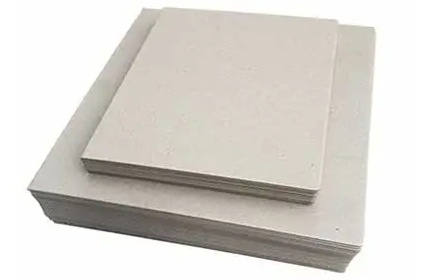
The reliability goal when evaluating cardboard manufacturers is not simply whether a board meets a spec on one test — it is whether that board meets that spec consistently across every batch across every reorder. Packing lines are calibrated for specific carton dimensions, fold behaviour, and taping characteristics. When a supplier delivers batches that vary in thickness, score line depth, or moisture content, the consequences compound: equipment jams, failed seals, inconsistent stack heights, and transit damage that the board grade should have prevented.
The best cardboard manufacturers sell performance consistency, not just sheets. That distinction is the correct lens for any supplier evaluation.
Understanding the difference between cardboard and paper prevents the most common specification mistake: treating them as interchangeable materials that differ only in thickness.
| Property | Paper | Cardboard (including corrugated) |
|---|---|---|
| Thickness and rigidity | Thin, flexible | Thick, rigid — designed for structural load |
| Primary function | Writing, printing, wrapping | Containment, protection, compression resistance |
| Layer structure | Single ply typically | Single or multi-ply; corrugated adds fluted core |
| Moisture sensitivity | High | Variable — depends on liner grade and treatment |
| Structural applications | Envelopes, bags, tissue | Shipping cartons, retail boxes, industrial packing |
| Specification | Why It Matters | Risk When Vague |
|---|---|---|
| Board type (single wall, double wall, flute type) | Determines compression and impact performance | Over- or under-spec for the application |
| Basis weight (gsm) and liner grade | Defines structural strength and surface print quality | Variable burst strength across batches |
| Edge crush test (ECT) or burst strength target | Stacking and transit performance metric | Carton failure under normal transit conditions |
| Moisture resistance specification | Humidity, refrigerated supply chains, outdoor storage | Warping, delamination, strength loss in humid conditions |
| Thickness and score line tolerances | Equipment compatibility on automated packing lines | Line jams, folding inconsistency, seal failures |
| Print surface requirements | Retail presentation vs industrial plain cartons | Wrong surface grade wastes cost or delivers poor print quality |
The most common quality failures — crushing, corner damage, warping, inconsistent die-cutting — trace directly to vague or missing specifications at the procurement stage.
Cardboard manufacturers supply a wide range of board grades, and the correct selection is the minimum specification that reliably hits your damage-rate target — not the highest specification available.
| Application | Primary Performance Requirements | What to Specify |
|---|---|---|
| E-commerce shipping cartons | Box compression, puncture resistance, consistent dimensions | ECT rating matched to transit route; tight thickness tolerance |
| Retail display packaging | Print surface quality, die-cut accuracy, visual consistency | Liner grade for print; die-cut registration tolerance |
| Industrial bulk packing | High stacking strength, edge crush resistance, moisture protection | Double wall board; moisture-resistant liner where required |
| Cold-chain packaging | Moisture resistance, delamination resistance, dimensional stability | Water-resistant treatment; accelerated ageing test data |
| Automated packing line cartons | Score line consistency, fold behaviour, taping compatibility | Score depth tolerance; trial on the specific equipment before scaling |
The selection logic: identify the damage failure mode you are protecting against, find the minimum board grade that reliably prevents it, and validate that grade on your actual packing equipment and transit conditions before committing to volume.
Evaluating a supplier is not complete when you receive an acceptable sample. The real validation is whether the board or carton performs consistently on your packing line and survives your shipping route.
Pack line trial: Run a representative batch through your complete packing sequence — forming, filling, taping or gluing, labeling, and palletising. Automated erectors are particularly sensitive to thickness and score line consistency. Identify any adjustments required to taping tension, erector settings, or stacking height before the first full production run.
Transit simulation: Test to the conditions your cartons actually experience — not the best-case scenario. Drop test to the height appropriate for your shipping mode. Stack test to the pallet height and duration used in your distribution chain. If your supply chain includes humid ports or refrigerated last-mile, include those conditions in the test.
| Evaluation Criterion | What to Verify | Why It Matters |
|---|---|---|
| Batch traceability | COA or inspection report format per batch | Enables root cause investigation when issues occur |
| Dimensional tolerance capability | Thickness, score line depth, die-cut registration | Determines compatibility with automated equipment |
| Moisture content control | Measurement and control process | Moisture variation causes fold failures and deformation |
| Change-control policy | Written policy on material substitutions | Prevents silent specification changes between reorders |
| Golden sample retention | Does the supplier retain a reference sample? | Essential for reorder consistency verification |
Before placing any volume order, approve a golden sample — a physical reference carton or board that represents the agreed specification. Retain copies with both buyer and supplier. All future production batches are compared against this reference. Any deviation requires written approval before shipment.
Unit price is the most visible cost in a cardboard procurement decision. The costs that determine whether that decision was actually economical are less visible.
| TCO Cost Driver | How It Inflates Beyond Unit Price |
|---|---|
| Damaged goods and returns | Board under-spec for transit conditions; cartons crushed on arrival |
| Repacking labour | Cartons that fail on the packing line require manual intervention |
| Packing equipment downtime | Inconsistent carton dimensions jam automated erectors or sealers |
| Storage waste | Warped or delaminated cartons unusable at point of consumption |
| Compliance failure costs | Cartons that fail retailer drop tests trigger chargebacks |
Storage: Cardboard is hygroscopic — it absorbs ambient moisture and loses compression strength as it does. Store in humidity-controlled conditions where cold-chain or high-humidity environments are involved. First-in-first-out rotation prevents old stock from sitting until moisture-degraded.
Incoming inspection: Periodic spot checks on incoming deliveries — thickness measurement, visual inspection for delamination or crushing, and compression spot check on a sample — catch batch quality issues before they reach the packing line.
Performance tracking: Monitor damage rate, carton failure mode, and supplier batch consistency across two to three reorder cycles. This data is the basis for any supplier conversation about quality issues — and for evaluating whether the supplier relationship is delivering the TCO outcome the initial selection predicted.
Q1: What do cardboard manufacturers typically supply?
Cardboard manufacturers supply a range of products depending on their capability: corrugated board in sheet form, custom-cut carton blanks, fully formed and printed retail boxes, and die-cut industrial packaging. Some manufacturers supply only board to converting operations; others offer fully finished packaging to specification. Confirm the scope of supply and whether value-added processes such as printing, coating, and die-cutting are in-house or subcontracted.
Q2: What is the practical difference between cardboard and paper for packaging applications?
The difference between cardboard and paper in packaging terms is primarily structural. Paper is thin, flexible, and used for wrapping, printing, and non-structural applications. Cardboard is thick, rigid, and designed to carry compressive and impact loads. Corrugated cardboard specifically adds a fluted core between liner sheets, dramatically improving the compression resistance-to-weight ratio. Specifying paper-grade material for a structural carton application, or paying for heavy cardboard grade where paper-backed packaging would suffice, are both specification errors with cost consequences.
Q3: How does board quality consistency improve ROI in a packing operation?
Consistent board quality reduces the costs that do not appear in the per-unit price comparison: damage claims from transit failures, repacking labour when cartons fail on the line, equipment downtime from inconsistent dimensions, and storage waste from delaminated or warped stock. For operations running automated packing lines, consistency has a disproportionate value — a batch that is 0.3 mm thicker than specification can jam an erector and stop a production line. Tracking damage rate and failure modes across reorders quantifies this ROI in measurable terms.
Q4: Do I need to modify my packing line when switching cardboard manufacturers?
Not necessarily, but you should verify before assuming compatibility. If the new supplier's board differs in thickness, score line depth, or stiffness from your current specification, your taping tension, erector calibration, or stacking configuration may need adjustment. The safe approach is a pack line trial with the new supplier's board before committing to volume — run a representative batch through the full packing sequence and identify any adjustments required before scaling.
Q5: What parameters do I need to provide for accurate cardboard quoting and specification?
Provide: board type preference (single wall, double wall, flute specification if known), carton or sheet dimensions, target compression or stacking strength requirement (ECT or burst strength), humidity and cold-chain exposure in your supply chain, print and finish requirements, order volume and reorder frequency, and any equipment-specific constraints on the packing line. The more specific the brief, the more reliable the specification comparison across multiple cardboard manufacturers.
Global sourcing works when specifications are performance-based and suppliers are process-disciplined. In 2026, evaluating cardboard manufacturers means verifying batch consistency, strength targets, moisture behaviour, and packing-line compatibility — while using a clear understanding of the difference between cardboard and paper to prevent grade specification mistakes that look minor but cost significantly in transit and operations.
Review product options at xiaolongpackaging.com/products/cardboard and submit the following to receive a recommended configuration and quotation:
Operating conditions: storage humidity, shipping route, stacking duration, cold-chain requirement
Monthly or per-order volume
Carton dimensions or sheet size, board type if known, thickness or gsm
Compression or stacking strength target, damage rate target, print requirements
Current failure modes: crushing, warping, high return rate, batch inconsistency, line jams