EN
EN 
In 2026, origami kit brands are navigating tighter margins from higher freight costs, faster trend cycles, and rising quality expectations around color consistency and paper feel. Sourcing origami paper through multiple distribution layers creates predictable problems at scale: batch color mismatch across SKUs, inconsistent GSM that affects fold behavior, and packaging damage that inflates return rates and replacement costs.
Direct factory sourcing with stable colour paper wholesale supply addresses these problems at their root. When the manufacturer controls pulp mix, GSM tolerance, color batching, and moisture content, reorder consistency improves measurably — reducing scrap, customer complaints, and the emergency sourcing cycles that erode margins faster than unit price differences ever could.
The quality of origami paper is determined by several interdependent manufacturing variables that most distributors cannot control or even measure:
| Manufacturing Variable | Effect on Kit Quality | Failure When Uncontrolled |
|---|---|---|
| Pulp fiber composition | Fold crispness and tear resistance | Tearing on standard folds; fraying at edges |
| GSM and basis weight | Foldability vs stiffness balance | Cracking on tight folds; limp feel in premium sets |
| Sizing and calendering | Surface smoothness and crease memory | Poor crease definition; rough surface that scuffs |
| Color batching discipline | Visual consistency across color sets and reorders | Color drift between packs in the same kit |
| Moisture content at packing | Sheet flatness and curl behavior | Curled sheets that jam automated counting and packing equipment |
Sourcing from a factory with documented process controls for each of these variables is the single most direct path to reducing origami kit quality complaints. Distributors who purchase from multiple factories and consolidate cannot guarantee batch-to-batch consistency for the same SKU across reorders — which is the consistency requirement that kit brands actually need.
Locking the right specifications upfront prevents the "samples great, bulk different" failure pattern that affects most paper sourcing without a controlled brief.
Locking GSM, color batch control, and curl/moisture specs is the fastest way to stabilize origami kit quality at scale.
| Specification | Typical Range for Origami Paper | Why It Matters |
|---|---|---|
| GSM / basis weight | 60–80 gsm for standard folding; 80–100 gsm for thicker premium paper | Too light: tears on complex folds. Too heavy: cracks on tight creases |
| Thickness tolerance | ±5% from nominal across the lot | Affects stack height, die-cut consistency, and pack count accuracy |
| Color system | Pantone-referenced targets with defined ΔE tolerance | Color drift between packs destroys kit visual consistency |
| Surface finish | Matte or smooth; single-sided or double-sided color | Affects fold appearance and print adhesion for branded kits |
| Moisture content | Controlled to prevent curl above defined threshold | Curled sheets cause counting errors and poor lay-flat in retail packaging |
| Sheet flatness | Lay-flat specification for automated packaging lines | Off-spec curl increases packing downtime and misfeed rates |
Sheet count per pack and count accuracy tolerance (±0 or ±1 depending on retail format)
Interleaving requirements between color groups within a kit pack
Anti-scuff protection on top and bottom of stack
Inner packaging material and outer carton burst strength for export transit
Carton dimensions and pallet configuration optimised for your freight mode
The packaging specification is not secondary to the paper specification — a well-specified paper delivered in under-engineered cartons still arrives damaged.
Colour paper wholesale sourcing supports different product tiers, and each tier has a distinct specification priority.
| Kit Format | Target Market | Priority Spec | Common Failure Without It |
|---|---|---|---|
| Kids educational kits | Schools, early learning | Durability on repeated folding; bright stable colors | Tearing after 3–4 folds; color that looks faded after storage |
| Craft retail kits | Consumer craft stores | Balanced GSM; broad accurate color palette; flat sheets | Color mismatch across color groups; curled sheets in display packaging |
| Premium origami sets | Specialty retail; gift market | Tight GSM tolerance; precise Pantone color matching; smooth finish | Visible thickness variation between color sheets in the same set |
| Seasonal or limited edition | Campaign-based retail | Custom color assortment with matching inserts | Color inconsistency across print-on-paper and kit paper elements |
Direct factory sourcing enables the custom color assortments, branded packaging inserts, and seasonal palette drops that kit brands use to differentiate — capabilities that most distribution-layer sourcing cannot support reliably or at reasonable MOQ.
Changing paper suppliers requires validation before scaling, regardless of how well the samples perform. Paper behavior on automated packaging equipment is the variable most commonly underestimated.
Step 1 — Golden sample approval Approve one golden sample per SKU covering GSM, color set, finish, sheet size, and packaging format. Retain physical samples with both the buyer and the factory. All future production batches are compared against this reference.
Step 2 — Fold testing across colors Not all colors within a set behave identically — darker pigment loads can affect stiffness and crease behavior. Test fold crispness, crease memory, and tear resistance across the full color range, not just the most neutral or lightest shade.
Step 3 — Packing line validation Run a representative batch through your complete packing sequence. Check for static charge (causes sheets to stick and miscount), curl behavior under your storage humidity, stack alignment in automated counting, and lay-flat quality in sealed retail packs. Document any adjustments required to counting tension, stacking speed, or storage conditions.
Step 4 — Carton and pallet standard confirmation Confirm that the carton packing standard — sheet orientation, inner packing, carton fill, and pallet build — delivers your required damage rate in transit. Drop test to your worst-case handling scenario before the first full production run.
| Control | What to Request | Why It Matters |
|---|---|---|
| Lot traceability | Production lot number on each carton | Root cause investigation when a quality issue occurs |
| COA / inspection report | Per-lot format with GSM, color check, moisture measurement | Objective incoming acceptance without full incoming inspection |
| Change-control policy | Written policy on material substitutions | Prevents silent paper source or formulation changes between reorders |
| Color batch matching | Rule for matching reorders to the approved color set | Prevents color drift between consecutive orders within the same product lifecycle |
The unit price comparison between factory-direct and distributor sourcing is usually the starting point of the cost conversation. It is rarely the most important number.
| TCO Cost Driver | How It Appears in Operations | Factory-Direct Reduction Mechanism |
|---|---|---|
| Scrap from curl and miscounts | Sheets rejected at packing; misfeed stops | Controlled moisture and flatness spec reduces incidence |
| Color mismatch returns | Customer or retailer return requests | Batch color control with ΔE tolerance eliminates drift |
| Rework labor | Repackaging kits with off-spec sheets | Higher first-pass quality reduces rework rate |
| Transit damage | Crushed or scuffed packs on arrival | Optimised export packaging reduces damage claims |
| Emergency reorders | Rush sourcing when a lot fails incoming inspection | Consistent quality reduces lot failure frequency |
| Freight waste | Oversized or underutilised cartons | Factory-direct cartonisation optimisation reduces dimensional weight billing |
Track these metrics across two to three reorder cycles after switching to direct factory supply:
Defect rate per lot (color, fold, dimension)
Color mismatch incidents per order cycle
Packing line downtime attributable to paper issues (static, curl, misfeed)
Landed cost per kit (including damage claims and rework amortised across the lot)
Reorder lead time stability (does the factory deliver consistently within the agreed window)
Q1: What makes origami paper different from regular coloured paper?
Origami paper is specifically formulated for clean folding behavior: balanced GSM to enable crisp creases without cracking, controlled fiber sizing for crease memory, surface smoothness for clean fold lines, and color penetration that does not fade or scuff under repeated handling. Regular coloured paper — including copy paper and some art papers — is often too stiff, too thick, or inconsistently manufactured to deliver repeatable fold quality across a production kit run.
Q2: How does origami paper compare to copy paper or art paper for kit manufacturing?
Copy paper is typically 75–80 gsm with a fiber structure optimised for printing, not folding — it often cracks on tight folds and feels rigid in the hand. Some art papers crack on crease points due to coating layers that do not flex cleanly. Purpose-made origami paper is manufactured with fold behavior as the primary design parameter: the right GSM range, appropriate sizing, and a surface that creases cleanly and holds definition without brittleness.
Q3: How does factory-direct sourcing improve ROI for origami kit brands?
Factory-direct colour paper wholesale sourcing reduces the TCO drivers that do not appear in unit price comparisons: fewer returns from color mismatch and fold failures, lower scrap rates from consistent GSM and flatness, better packaging optimisation that reduces transit damage, and fewer emergency reorders caused by lot rejections. For brands running monthly or bi-monthly replenishment, these savings compound significantly across a year.
Q4: Do I need to modify my packing process when switching to a new origami paper supplier?
Potentially. Paper properties that affect automated packing — curl tendency, static charge, and sheet thickness — can vary between suppliers even when the nominal specification is similar. The safe approach is a short sampling and pilot run through your complete packing sequence before committing to volume. This validates counting accuracy, stacking behavior, and seal quality under your specific equipment and storage conditions.
Q5: What parameters do I need to provide for accurate quotation and specification matching?
Provide: sheet size (e.g., 15×15 cm, 20×20 cm), GSM or weight range preference, color count and any Pantone targets or reference color set, surface finish (matte or smooth), single-sided or double-sided color, pack count per unit, inner and outer packaging requirements, order quantity per SKU and total monthly or quarterly forecast, and a description of your current quality issues if applicable. The more specific the brief, the more accurate the specification and cost comparison across potential colour paper wholesale suppliers.
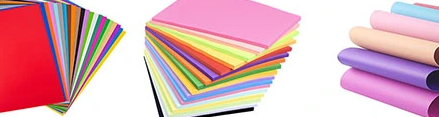
For origami kit manufacturers, factory-direct sourcing is a quality and reorder strategy as much as a cost strategy. When origami paper specifications are standardised and colour paper wholesale supply is batch-controlled, the downstream costs — returns, rework, damage claims, emergency shipments — reduce in ways that compound positively across every reorder cycle.
Review product options at xiaolongpackaging.com/products/colored-paper and submit your target market, sheet size, GSM range, color count, finish preference, pack count requirements, order volume, and current quality issues to receive a recommended configuration and quotation.