EN
EN 
In 2026, premium rigid boxes travel farther, sit longer in humid ports, and pass through more climate transitions than at any previous point in global supply chains. A luxury gift box that leaves the factory perfectly square and flat can arrive at the destination warehouse with a lid that no longer closes, corners that have lifted, and a wrap surface that has bubbled away from the core — not because the box was dropped or crushed, but because the chip board at its center absorbed moisture during the voyage and warped under the internal stress that moisture imbalance creates.
This is the moisture struggle that packaging buyers in 2026 cannot afford to ignore. Grey cardboard — the rigid sheet that forms the structural core of every set-up box, book-style box, and magnetic closure box — is a fiber-based material, and fiber absorbs moisture. When it does, the fibers swell unevenly, internal stresses build, and the board curves away from flat. The solution is not to avoid moisture exposure — that is impossible in sea freight — but to specify grey cardboard engineered for moisture content control, high-density compaction, and strong internal bonding, so that the board resists moisture uptake and maintains its dimensions from factory to shelf.
Xiaolong's grey cardboard range is built around exactly this requirement: recycled fibers pressed and compacted into rigid sheets with controlled moisture ranges, flatness tolerances, and internal bond specifications that give packaging buyers the measurable anti-warp performance data they need to make a defensible material selection.
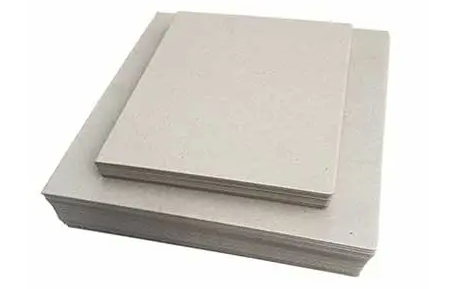
Not all paperboard is the same, and the distinction matters most when the board is being asked to maintain dimensional stability through a 30-day sea freight voyage in a container that cycles between 15°C and 40°C with relative humidity above 80%.
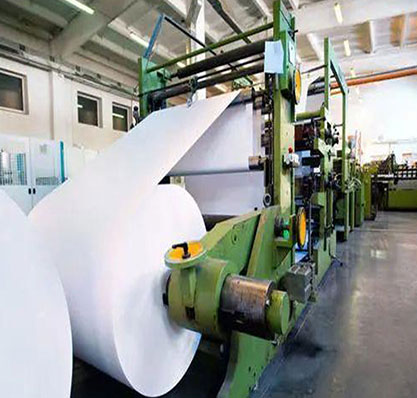
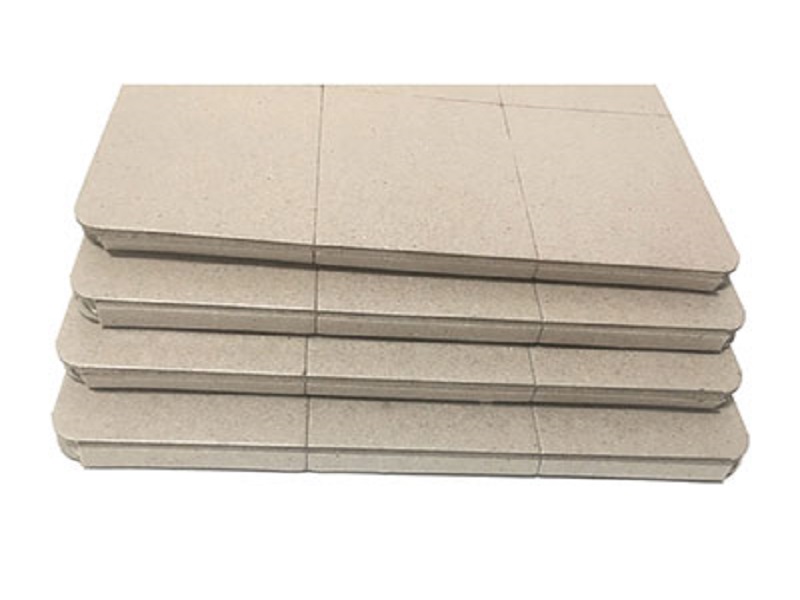
Chip board — also called greyboard or grey cardboard — is a rigid paperboard manufactured from recycled fiber that is pulped, formed into a wet sheet, and then pressed and compacted under high pressure to produce a dense, stiff panel. The recycled fiber content gives the board its characteristic grey color and its cost efficiency relative to virgin fiber boards. The pressing and compaction process is what gives it the rigidity and dimensional stability that make it suitable as the structural core of a rigid box.
Regular corrugated board and folding carton board are designed for different performance requirements — corrugated for cushioning and compression strength in shipping, folding carton for printability and crease performance in consumer packaging. Neither provides the flat, rigid, wrapable surface that a set-up box requires. Grey cardboard is the material specifically engineered for this application, and its performance in humid conditions is determined by how well the manufacturing process controls moisture content and fiber density.
In 2026, as lead times have extended and shipping routes have become more variable, the specification conversation has shifted from "what thickness do I need?" to "what dimensional stability can I guarantee at the destination?" A 2mm grey cardboard sheet that arrives at the converting facility at the correct thickness but with a moisture content 4% above the target will produce boxes that warp during the wrapping process and fail closure testing — regardless of whether the thickness was correct. Moisture content control is the upstream specification that determines whether the thickness specification is meaningful at the point of use.
Understanding the mechanism of moisture-driven warping clarifies why moisture content control is the primary anti-warp specification — and why it must be specified as a range rather than a single value.
Grey cardboard is a fiber composite. When the fibers absorb moisture, they swell in the cross-direction — perpendicular to the fiber orientation — more than in the machine direction. If both faces of the board absorb moisture equally, the swelling is symmetric and the board remains flat, though it may soften. If one face absorbs more moisture than the other — which is the typical condition in a shipping container where one side of a pallet is exposed to condensation or airflow — the swelling is asymmetric. The wetter face expands more than the drier face, and the board curves toward the drier face. This is the warp that causes lid misalignment, corner lift, and wrap bubbling in finished rigid boxes.
The severity of the warp depends on three factors: the magnitude of the moisture differential between the two faces, the stiffness of the board (higher density boards resist the bending force more effectively), and the internal bond strength of the board (higher internal bond resists the delamination that accelerates warp under repeated humidity cycling).
Moisture content control means that the board is manufactured and conditioned to a defined moisture range — not just a nominal value — and that the range is tight enough to ensure consistent performance across a production batch. Xiaolong's grey cardboard specifications define moisture ranges by thickness and grammage:
| Thickness | Moisture Content Range |
|---|---|
| 1mm grey cardboard | 8±1.5% to 10±1.5% depending on grammage |
| 3mm grey cardboard | 12±1.5% |
These ranges reflect the equilibrium moisture content that the board reaches when conditioned at standard temperature and humidity before shipment. A board shipped within its specified moisture range has a known starting point — which means the moisture differential that develops during sea freight is predictable and can be managed through pack-out practices rather than being an unknown variable that produces unpredictable warp at the destination.
Specifying grey cardboard for moisture-resistant packaging requires more than a thickness and grammage target. The following specifications are the measurable properties that predict anti-warp performance in humid shipping conditions.
| Specification | What It Measures | Why It Matters for Anti-Warp |
|---|---|---|
| Moisture content range | Water content as a percentage of dry fiber weight | Determines the starting moisture level and the margin before warp-inducing moisture differential develops |
| Skewness / flatness tolerance | Maximum deviation from flat across the sheet | Directly controls the squareness of the finished box and the closure tolerance of the lid |
| Internal bond strength | Resistance to delamination between fiber layers | Prevents layer separation during humidity cycling, which accelerates warp and causes wrap bubbling |
| Thickness tolerance | Dimensional consistency across the sheet | Controls fit and closure tolerance in the finished box; inconsistent thickness produces uneven lid gaps |
| Density / compaction level | Mass per unit volume of the pressed sheet | Higher density resists moisture uptake and provides greater stiffness to resist bending forces from moisture differential |
Xiaolong's 1mm grey cardboard specification provides concrete values for these parameters: skewness tolerance of ≤±3mm, which controls the squareness of the finished box; internal bond of ≥121 mN·m, which supports wrapping and lamination and resists layer separation during humidity swings; and thickness tolerances by grammage that allow the packaging designer to set closure tolerances with confidence.
The high-density compaction that Xiaolong describes — recycled fibers pressed and compacted into rigid sheets — is the manufacturing foundation for these performance specifications. A more densely compacted board has less void space for moisture to occupy, a higher stiffness-to-thickness ratio that resists bending forces, and a more uniform fiber distribution that produces consistent moisture uptake across the sheet rather than the localized wet spots that create the most severe warp.
The moisture-driven failure modes that grey cardboard specification prevents are most visible — and most costly — in premium packaging applications where the finished box is the first physical impression the customer receives of the brand.
Luxury gift boxes for cosmetics, fragrance, and jewelry are the highest-risk application because the lid-to-base fit tolerance is tight by design — the premium tactile experience of a well-fitted lid depends on the base and lid maintaining their dimensions through the supply chain. When the chip board core warps, the lid no longer fits squarely, the magnetic closure does not align, and the box that was designed to communicate quality communicates the opposite.
Electronics accessories packaging — rigid boxes for headphones, watches, and premium cables — faces the same risk with the additional complication that the internal tray or insert is often die-cut to a tight tolerance. A warped base changes the internal dimensions and causes the insert to fit loosely or not at all.
Book-style rigid boxes and rigid drawer boxes are vulnerable to corner lift — where the wrap material separates from the board at the corners because the board has curved away from the wrap adhesive bond. Corner lift is a visible defect that triggers customer complaints and return requests even when the product inside is undamaged.
| Failure Mode | Root Cause | Prevention |
|---|---|---|
| Lid/base misalignment | Board warp changes the perimeter dimensions of base or lid | Specify skewness ≤±3mm and moisture content range |
| Corner lift | Board curves away from wrap adhesive bond at corners | Specify internal bond ≥121 mN·m and control moisture at converting |
| Wrap bubbling | Moisture differential causes board to bow away from laminated surface | Control moisture content range and use moisture barrier in pack-out |
| Magnet closure misclosure | Warp displaces magnet position relative to catch | Specify flatness tolerance and validate closure after humidity stress test |
| Softening and loss of rigidity | Moisture uptake reduces fiber stiffness | Specify moisture content range and high-density compaction |
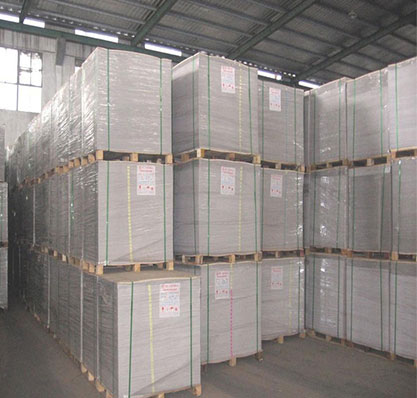
The moisture content range specified at the board manufacturer is the starting point — but it can be compromised at the converting facility if the board is not handled correctly. Boards left exposed near open loading docks in humid weather absorb moisture from one face, creating the asymmetric moisture differential that causes warp before the box is even assembled. Boards stored directly on concrete floors absorb ground moisture through the bottom of the pallet.
First-in-first-out stock rotation prevents boards from sitting in storage long enough to equilibrate to the converting facility's ambient humidity — which may be significantly different from the conditioning humidity at the board manufacturer. Sealed pallet practices — keeping boards in their original moisture barrier wrap until they are needed at the converting station — maintain the board's moisture content at the specified range through the storage period.
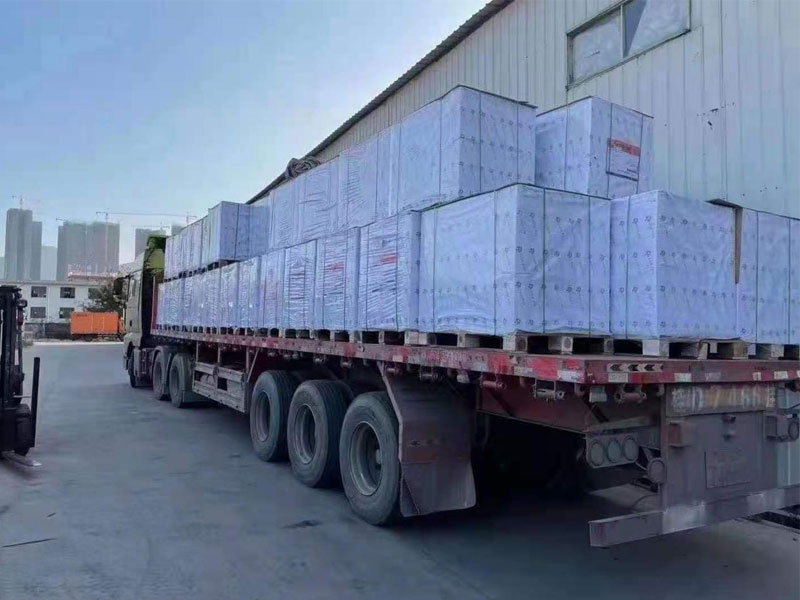
For finished rigid boxes being shipped by sea freight, the pack-out plan is as important as the board specification. Moisture barrier wrap around each pallet prevents the condensation that forms on the outside of a shipping container from reaching the boxes. Desiccant sachets inside the barrier wrap absorb the residual moisture that is present in the air inside the wrap at the time of sealing. Corner protection prevents the mechanical damage that creates entry points for moisture. Pallet clearance from the container floor prevents ground moisture absorption through the pallet base.
| Cost Item | Without Moisture-Controlled Grey Cardboard | With Specified Moisture-Controlled Grey Cardboard |
|---|---|---|
| Rework rate from warped boards | High — boards that warp during converting require re-wrapping or scrapping | Low — controlled moisture content reduces warp incidence at converting |
| Finished box rejection rate | High — warped boxes fail closure testing and are rejected before shipment | Low — flat boards produce boxes that pass closure testing consistently |
| Customer complaint rate | High — boxes that warp in transit generate returns and brand damage | Low — dimensionally stable boxes arrive looking premium |
| Material cost per finished box | Lower nominal board cost, higher total cost including rework and rejects | Higher nominal board cost, lower total cost including rework and rejects |
| Audit and compliance risk | Higher — inconsistent quality creates audit findings from brand owners | Lower — documented specifications support quality system compliance |
For a premium packaging operation producing 50,000 rigid boxes per month with a 3% warp-related rejection rate and a rework cost of $0.80 per box, the monthly rework cost is $1,200. Reducing the rejection rate to 0.5% through correct grey cardboard specification avoids $1,000 per month in direct rework cost — before accounting for the customer complaint and return cost that warped boxes generate at the destination.
If your premium rigid boxes are failing closure or losing squareness after sea freight, the fix starts with the core. A chip board specified for moisture content control, high-density compaction, and strong internal bonding — with measurable flatness and internal bond specifications that can be validated before production release — gives the box the dimensional stability it needs to survive the humidity exposure of a cross-ocean voyage and arrive at the destination looking exactly as it left the factory.
Grey cardboard is not a commodity specification. The difference between a board that warps at 80% relative humidity and one that stays flat is measurable in the moisture content range, the skewness tolerance, and the internal bond strength — and those differences are worth specifying, validating, and protecting through the pack-out and storage practices that maintain the board's performance to the point of final assembly.
Visit the grey cardboard product page to review the full thickness and grammage range, then submit your shipping and performance requirements for a matched specification and quotation.
Visit the grey cardboard product page to review the full range, then submit the following details to receive a matched board specification and quotation:
| Parameter | What to Provide |
|---|---|
| Work condition | Shipping route (sea or air), expected humidity and temperature exposure, storage time at destination |
| Quantity | Sheets or tons per month, trial order quantity |
| Size and spec | Thickness (1–4mm), sheet size, target grammage, lamination or wrapping method |
| Target metrics | Moisture content range target, flatness and warp limit, internal bond target, closure tolerance requirement |
| Current problem | Warping, softening, delamination, lid not closing, wrap bubbling, corner lift |
1. What is chip board?
Chip board — also called greyboard or grey cardboard — is a rigid paperboard manufactured from recycled fibers that are pulped, formed into sheets, and pressed and compacted under high pressure to produce a dense, stiff panel. It is used as the structural core of rigid set-up boxes, book-style boxes, magnetic closure boxes, and other premium packaging formats where a flat, rigid, wrapable surface is required. The grey color comes from the recycled fiber content. The rigidity and dimensional stability come from the pressing and compaction process, which determines the board's density, moisture resistance, and internal bond strength.
2. How does grey cardboard compare to corrugated board and MDF for rigid box applications?
Grey cardboard is the correct choice for rigid box structure and premium finishing — it provides the flat, rigid surface required for wrapping with paper, fabric, or laminate, and the tight dimensional tolerances required for fitted lid-to-base closure. Corrugated board provides superior cushioning and compression strength for shipping applications but does not provide the flat, wrapable surface or the tight dimensional tolerances that premium rigid box aesthetics require. MDF provides very high rigidity and is used in some premium packaging applications, but it is significantly heavier than grey cardboard, has a higher material cost, and requires different processing equipment for cutting and grooving. For the majority of luxury gift box, cosmetics, and electronics accessories packaging applications, grey cardboard is the correct primary structural material.
3. How does moisture-resistant chip board pay back?
The payback comes from three sources. Reduced rework from warped boards — because boards that maintain their moisture content within the specified range warp less during converting and produce boxes that pass closure testing at a higher rate — directly reduces the material and labor cost of rework and scrap. Reduced finished box rejection rate — because dimensionally stable boards produce boxes that arrive at the destination with the correct closure tolerance — reduces the cost of returns and replacement shipments. Reduced customer complaint rate — because boxes that arrive looking premium rather than warped protect the brand value that the premium packaging investment was made to create. For premium packaging operations where the box cost is a significant fraction of the total product cost, the payback from reduced rework and returns typically exceeds the material cost premium of a correctly specified grey cardboard within the first production run.
4. Do I need to redesign my rigid box if I upgrade to a moisture-controlled grey cardboard specification?
Not necessarily. In most cases, upgrading to a tighter moisture content range and flatness specification within the same thickness and grammage does not require changes to the box die-line, groove depth, or wrap allowances. If the upgrade involves a change in thickness or grammage — for example, moving from a standard density board to a higher density board at the same nominal thickness — the actual thickness may differ slightly from the previous specification, and the die-line and wrap allowances may need to be adjusted to maintain the correct closure tolerance. Confirm the actual thickness tolerance of the new specification against the die-line before committing to a production run, and run a prototype closure test with the new board before releasing the production order.
5. What parameters should I provide to select the right grey cardboard?
Provide the required thickness in millimeters, the target grammage range, the sheet size, the moisture content range requirement for the shipping and storage conditions the box will be exposed to, the flatness and warp tolerance required for the closure design, the internal bond strength requirement for the wrapping and lamination method being used, and the shipping and storage humidity exposure profile — including the shipping route, the expected temperature and humidity range during transit, and the storage time at the destination before the boxes are used. Thickness and moisture content range are the two parameters that most directly determine which grey cardboard specification is correct for the application, and the shipping humidity exposure profile is the context that determines how tight the moisture content range needs to be.