EN
EN 
A cardboard food package may look perfectly stable when it leaves the converting line, yet the real test begins only after food goes inside. Steam from a hot meal, oil from fried food, condensation from chilled products, or moisture released during storage can all change the way the board behaves.
This is where biodegradable cardboard becomes more complicated than it first appears. A fiber-based package can offer a strong environmental advantage, but it still has to remain clean, rigid, and functional long enough to protect the food. Improving that performance often requires coatings or surface treatments, and those additions can affect what happens to the package after use.
The practical challenge is therefore not to make cardboard completely resistant to everything. It is to give the package enough protection for the food, temperature, storage period, and distribution conditions it will actually encounter. In many cases, the simplest workable structure is more useful than the strongest possible barrier.
Cardboard does not usually fail all at once when it meets moisture. The change tends to begin gradually. The board may lose stiffness first, especially around folds, bottom panels, edges, or areas where condensation collects. Once those sections soften, the package can begin to feel less stable even though it is still intact.
The source of moisture matters just as much as the amount. A chilled food box may be affected by condensation on the outside. A takeaway container holding hot food is more likely to face steam from within. Fresh foods can release moisture over time, while sauces or other wet ingredients create more direct contact with the inner surface.
These situations place different demands on biodegradable cardboard. A board that performs well for a dry bakery item may not behave the same way when used for a warm meal containing steam or sauce.
The structure of the package can make the difference even more noticeable. Moisture that spreads across a flat surface may be manageable, while water collecting along a crease or exposed cut edge can penetrate more quickly. This is why material testing should not stop with a flat sheet. The finished box, tray, sleeve, or carton needs to be considered as a complete structure.
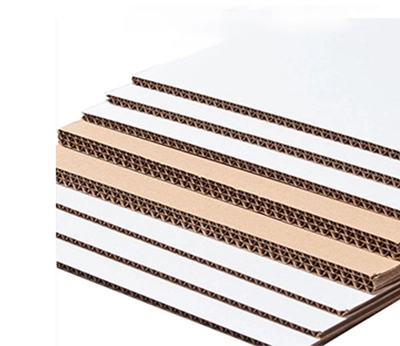
There are also clear differences among the different types of cardboard used for food packaging. Fiber composition, density, board thickness, surface finish, and converting quality all influence how readily moisture moves into the material and how much rigidity remains afterward.
Oil creates a different kind of problem. Instead of simply softening the board, grease can move into the fibers and leave dark marks that are immediately visible from the outside. The package may still hold its shape, but once oil stains appear, the presentation can look poor and the customer may perceive the packaging as less clean.
This is especially relevant for fried foods, pastries, baked products, takeaway meals, and dishes containing sauces or dressings. These foods can place persistent oil against the board for much longer than a dry snack ever would.
For that reason, grease resistance should not be treated as a standard feature that every package needs to the same degree. A dry biscuit carton may require very little protection. A container holding warm, oily food needs considerably more.
A biodegradable cardboard base on its own does not necessarily provide that resistance. The finished performance usually comes from the board structure, a surface treatment, or another barrier layer designed to slow oil penetration.
Temperature also changes how the package performs. Warm grease tends to move more easily than cool grease, so a material that appears suitable during a room-temperature test may behave differently once freshly cooked food is packed inside. This is one reason why real-use testing is more valuable than relying only on general material descriptions.
Surface treatments are often what make fiber-based food packaging practical. They can reduce how quickly moisture or oil reaches the paper fibers, giving the package enough time to remain stable through filling, transport, display, and consumption.
The difficulty is that every added layer changes the package to some extent. A coating may improve grease resistance, but it can also affect repulpability, compostability, or biodegradation depending on what the coating is made from and how it is applied.
This distinction matters when a package is described as biodegradable cardboard. The board itself may break down under suitable conditions, yet the finished package includes more than the board. Printing inks, adhesives, coatings, windows, laminations, and other components can all influence the final end-of-life behavior.
For that reason, selecting a coating is not just a question of asking which option provides the highest barrier. The better question is how much resistance the product actually needs and whether the chosen treatment is appropriate for the intended disposal route.
Some food applications need strong grease protection but only limited moisture resistance. Others face the opposite problem. A single barrier solution does not automatically suit both.
This is also why comparing different types of cardboard only by thickness or appearance can be misleading. The board and the surface treatment need to work together. A good combination can deliver the required protection without making the packaging structure unnecessarily complex.
There is no single cardboard grade that is best for every food package. The correct choice depends on what the food does to the material after filling.
Dry foods usually place more emphasis on stiffness, printability, folding performance, and shelf appearance. Greasy foods shift attention toward oil resistance. Hot takeaway products introduce steam and heat, while chilled products often create condensation on the outer surface. Foods with high moisture content may need a stronger internal barrier if they remain in contact with the board for an extended period.
These differences explain why the different types of cardboard used in food packaging cannot be selected by a single specification. Kraft-based board may suit brands looking for a natural appearance. Coated paperboard can provide a smoother surface for detailed graphics. Duplex and other board structures may be selected when a particular balance of rigidity, printing quality, and converting performance is required.
What matters most is how the material performs once it becomes part of the final package. Scoring, folding, gluing, forming, and coating can all change the behavior of the original sheet.
| Food Condition | Main Risk to the Package | What Matters Most in Board Selection | Barrier Focus |
|---|---|---|---|
| Dry foods | Loss of shape or poor shelf presentation | Stiffness, printability, and converting quality | Usually limited |
| Greasy foods | Oil penetration and visible staining | Stable board with appropriate grease resistance | Grease protection |
| Hot takeaway meals | Steam, heat, grease, and temporary moisture | Structural stability under changing conditions | Moisture and grease protection |
| Chilled foods | Condensation and humid storage | Resistance to softening from surface moisture | Moisture management |
| High-moisture foods | Longer contact with water-rich contents | Board and barrier compatibility | Stronger moisture protection |
Because the board structure and food condition are closely connected, material selection is more reliable when the expected filling temperature, contact time, package shape, and distribution environment are already known. Buyers can compare different paper and cardboard packaging options from Xiaolong Packaging when evaluating which structure is more appropriate for a specific food application.
Barrier performance is not fixed. The same package can behave differently as temperature and storage conditions change.
Hot food is a good example. Freshly packed food can release steam immediately after filling. If the package is closed, that moisture has nowhere to go and may eventually condense on the inner surface. At the same time, heat can encourage oils to spread more quickly through weak areas of the barrier.
A package that looks fine after ten minutes may therefore behave differently after a longer holding period. The same is true for chilled food. A carton kept in a cold environment may remain stable until it is moved into warmer air and condensation begins to form on the outside.
Storage duration is just as important. Packaging intended for short takeaway use does not face the same demands as packaging used for products that remain packed for hours or days.
This is why broad claims such as “water-resistant” or “grease-resistant” do not tell the whole story. The useful question is how long the package needs to resist those conditions and at what temperature.
For biodegradable cardboard, this distinction is particularly important. The package needs to remain stable during its useful life, but it does not necessarily need the kind of long-term resistance that would make the structure harder to recover or break down afterward.
The most difficult trade-off appears when better barrier performance requires a more complex material structure.
A plain fiber-based board may have good potential for biodegradation under suitable conditions. Once additional coatings, laminations, or other layers are added, the finished package may behave differently even though the base material is still cardboard.
This is why describing a package as biodegradable cardboard should involve more than checking the substrate. The coating, adhesive, print system, and any attached components all contribute to the performance of the finished pack.
At the same time, removing protection simply to keep the structure simple is not a sensible solution. If food leaks, spoils, contaminates the outer package, or becomes difficult to transport, the packaging has failed at its primary job.
The better approach is to avoid over-engineering. A dry food product should not automatically receive the same barrier system as an oily takeaway meal. A short-contact package may not need the same level of moisture resistance as a container used for longer storage.
Understanding the different types of cardboard available makes it easier to find that balance. In some cases, the board itself can provide more of the required strength or surface performance, reducing the need for additional treatment. In other cases, a carefully selected coating is necessary.
For buyers, this is also where clear communication with the packaging supplier becomes useful. Instead of asking for a general “biodegradable food box,” it is more helpful to explain what food will be packed, whether it is hot or chilled, how much oil or moisture is present, and how the package will be used. Businesses developing new food packaging can discuss their cardboard packaging requirements with Xiaolong Packaging before the material and barrier structure are finalized.
Good biodegradable cardboard food packaging is not defined by maximum resistance to moisture and grease. It is defined by having enough resistance for the job without making the finished structure more complicated than necessary.
That balance changes from one product to another. Dry foods, oily foods, hot takeaway meals, chilled products, and high-moisture foods all place different stresses on the board. As a result, the different types of cardboard used for these applications should be evaluated in relation to real filling, storage, transport, and handling conditions.
Surface treatments can extend performance where needed, but they should be selected together with the desired end-of-life pathway. Looking only at the cardboard substrate gives an incomplete picture of whether the finished package is truly suitable for recycling, composting, or biodegradation.
For most projects, the best solution is the one that protects the food reliably, keeps the package presentable throughout use, and avoids unnecessary layers once that protection is no longer needed.
No. The cardboard base may be biodegradable, but coatings, adhesives, laminations, and other components can change the end-of-life behavior of the finished package.
Yes, when the board is combined with an appropriate structure or surface treatment. The required level of protection depends on the food, temperature, and expected contact time.
Water can interfere with the bonding between paper fibers, reducing stiffness and making the board more likely to bend or deform.
Yes. Different types of cardboard vary in stiffness, surface finish, printability, and barrier compatibility, so the right choice depends on the food and package design.
Not necessarily. It depends on the coating material and the complete package structure. The coating and board should be evaluated together rather than separately.
Start with the real use conditions. Consider whether the food is dry, greasy, hot, chilled, or moisture-rich, then choose a biodegradable cardboard structure that provides enough protection without adding unnecessary complexity.