EN
EN 
Not every retail product needs to be enclosed in a full box. For many lightweight items, the packaging only needs to keep the product organized, provide a clear area for branding, and make the pack easy to display. In these situations, a paper header card attached to a clear bag can often do the job with a simpler structure while allowing shoppers to see the actual product.
The difference becomes more important when packaging is being developed for retail hooks, compact product ranges, or products whose appearance helps drive the buying decision. A full carton may add protection and printing space, but it can also hide the product and introduce material that is not always necessary. A custom header card, by contrast, keeps the branding concentrated at the top of the package while leaving the product itself visible.
That does not make header cards the better option in every case. Once product weight increases, protection requirements become more demanding, or the package needs extensive instructions and brand storytelling, a full retail box may offer clear advantages. The right choice depends on how the product will be displayed, handled, transported, and ultimately presented to the customer.
One of the clearest advantages of a paper header card is that it allows the product to remain part of the presentation. When the card is paired with a transparent bag or pouch, shoppers can inspect the actual item instead of relying only on images printed on the packaging.
This matters most when color, texture, shape, quantity, finish, or workmanship influences the purchase decision. Small accessories, hardware, textile products, craft supplies, promotional items, and similar goods often benefit from being seen directly. In these cases, the product itself communicates useful information that would otherwise need to be reproduced through photography or graphics.
A full retail box provides more printing space, but more surface area does not always create a better customer experience. When shoppers mainly want to confirm what the product looks like, enclosing it behind paperboard can add distance between the customer and the item.
A custom header card solves this by concentrating communication where it is most useful. The upper section can carry the brand, product name, variant information, and essential purchasing details, while the transparent part of the package keeps the item visible. This creates a balance between branding and product transparency without requiring a fully enclosed carton.
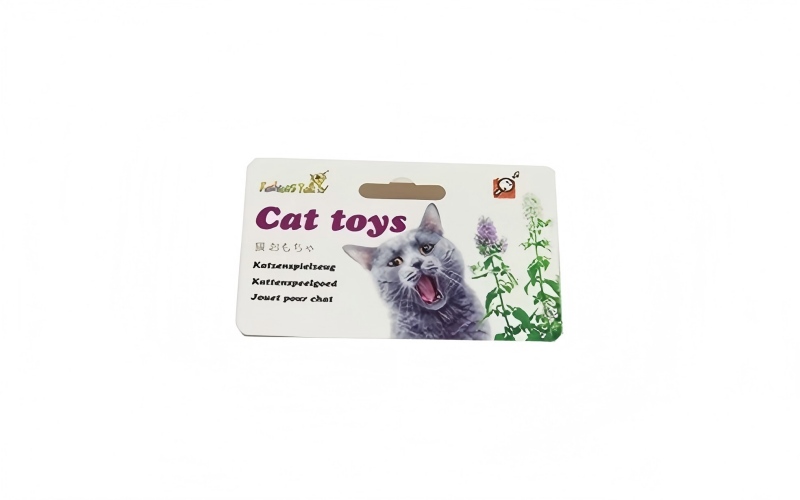
A full retail box surrounds the product on several sides, while a header card uses paperboard mainly where it contributes to branding and display. For products that do not require rigid enclosure, this can create a more efficient packaging structure.
Using less paperboard does not necessarily mean the package will look less professional. A well-designed paper header card can still create a strong visual identity through typography, color, graphics, brand positioning, and finishing. Because the available area is more compact, each design element has to work harder and contribute more clearly to the presentation.
This can be particularly effective across a product range. When several SKUs share the same header dimensions, logo position, type style, and visual system, the entire range can appear consistent even though the packaging structure is simple. Product variations can then be distinguished through color coding, product names, or small artwork changes rather than completely different box structures.
Material efficiency should still be evaluated across the complete package. The bag, card, printing process, coating, lamination, attachment method, and shipping carton all contribute to the overall packaging system. A lighter format only makes sense when it continues to perform properly during packing, transport, display, and handling.
For brands trying to simplify packaging without reducing shelf impact, the more useful question is not simply how much material can be removed. It is whether every component is performing a necessary function. When a full enclosure does not contribute meaningful protection or presentation value, a custom header card can often provide a more focused solution.
Product weight is one of the most important practical factors when deciding whether a paper header card is suitable. The card, attachment area, and hanging hole must remain stable once the product is packed and suspended on a retail hook.
If the product is too heavy for the chosen board or structure, the header may bend, the hanging hole may gradually tear, or the connection between the card and bag may weaken. This is why paperboard selection should not be based on appearance alone. Card stiffness, dimensions, fold structure, grain direction, hang-hole position, and attachment method all influence how the finished package behaves.
Weight distribution matters as much as total weight. A relatively light item can still create stress if it has sharp corners or if most of its mass sits at one end of the package. Excessive movement inside the bag may repeatedly pull against the header during transport or customer handling.
A well-designed custom header card therefore needs to be matched to the real product rather than designed as an isolated printed component. The bag width, product dimensions, hanging position, and attachment zone should work together as one package.
Before mass production, testing a finished sample with the actual item is more useful than evaluating an empty card. The package should hang naturally, remain visually balanced, and stay intact when it is moved or handled. This helps confirm whether the header card structure is genuinely appropriate rather than simply attractive in the artwork file.
Header cards are especially useful in retail environments where products are displayed on hooks rather than stacked on shelves. Their structure allows compact products to be arranged vertically while keeping the front of each pack visible.
This can improve browsing when a retailer carries multiple colors, sizes, models, or related accessories. A consistent paper header card format creates a clear visual family while allowing shoppers to compare variations without removing products from a box.
The hanging hole should be treated as part of the package structure rather than as a detail added after the artwork is complete. Its position affects how the pack balances on the hook, how much printable space remains available, and where the brand or product name can be placed.
If the hole sits too close to an edge or does not align well with the weight of the product, the package may tilt or place unnecessary stress on the card. If it consumes too much of the upper design area, the branding may become difficult to organize. These issues are easier to solve when display requirements are considered before the artwork is finalized.
A custom header card also gives brands flexibility in matching the card width and shape to the product. A narrow format may work well for compact accessories, while a wider format can create stronger brand presence or better align with the width of the bag.
The header card is also only one of several structures that can work for retail presentation. Products that need different levels of enclosure, printing area, or shelf support may benefit from comparing different custom paper packaging formats before the structure is finalized. This makes it easier to judge whether a hanging header card, folding carton, or another paper-based format better matches the way the product will actually be sold.
A paper header card is not intended to replace every retail box. A full carton remains the stronger option when the product needs more protection, greater stacking stability, or significantly more space for printed information.
Fragile products and items with delicate surfaces often benefit from full enclosure. A box can reduce direct contact with the product and can also accommodate inserts, dividers, or internal supports that hold components in position during shipping.
A carton also gives designers more room to explain the product. When the packaging needs to carry detailed instructions, warnings, multilingual information, technical specifications, or extensive brand storytelling, a compact custom header card can quickly become crowded.
This is particularly important for products where the packaging itself plays a major role in customer education. If the buyer needs to understand setup, compatibility, use conditions, or multiple product features before purchasing, the larger printable area of a box may be more practical.
Premium positioning can also influence the choice. Some products rely on a controlled unboxing experience or on fully printed surfaces to reinforce perceived value. In those cases, the additional material and structure of a retail box may be justified because the packaging is part of the overall product experience.
Boxes can also be easier to stack on shelves or pack in uniform rows. Header cards are naturally optimized for hanging environments, while cartons often perform better where products need flat surfaces, regular dimensions, and a more rigid shape.
| Decision Factor | Paper Header Card Packaging | Full Retail Box |
|---|---|---|
| Product visibility | Excellent when combined with a clear bag or pouch | Usually depends on printed images or a display window |
| Typical product fit | Lightweight, compact, visually inspectable products | Fragile, heavier, premium, or multi-component products |
| Retail display | Well suited to peg hooks and hanging displays | Well suited to shelves and stacking |
| Branding area | Focused and relatively compact | Larger printable area across several panels |
| Structural protection | More limited and dependent on the complete card-and-bag structure | Generally provides stronger enclosure and compression protection |
| Packaging material | Can use less paperboard when full enclosure is unnecessary | Requires more board to surround the product |
| Information capacity | Best for concise product and brand information | Better for detailed instructions and technical content |
| Product access | Allows customers to see the actual item through clear packaging | Usually keeps the product more enclosed until opening |
The best packaging choice usually becomes clearer when the entire product journey is considered rather than when two empty packaging samples are compared side by side.
The product itself should come first. Its weight, surface sensitivity, need for rigid protection, and value of direct visibility all influence whether a paper header card is appropriate. A visually distinctive product may gain value from being exposed through a transparent bag, while a delicate item may need the more controlled environment of a carton.
The display environment comes next. Packaging developed for peg hooks needs to hang correctly and remain easy to browse, while packaging designed for shelf stacking may benefit from the rigid shape of a box. The same product can therefore require a different structure depending on the retail program.
The sales channel can change the decision again. A header card that performs well in a physical store may require additional secondary protection if individual packs will also be shipped through e-commerce channels. A full box, on the other hand, may provide more enclosure than necessary for a high-volume product that will mainly be displayed on retail hooks.
Artwork should only be finalized once these functional requirements are understood. With a custom header card, the designer has to coordinate branding, product identification, barcode placement, fold position, hang-hole area, and attachment zone within a relatively compact printed surface.
Sampling becomes particularly important when changing an existing retail box to a header card format. A physical prototype makes it possible to see whether the card sits cleanly on the bag, whether the product remains well positioned, and whether the finished package looks balanced from normal shopping distance.
For projects where the choice is not obvious, testing the product with the intended packaging structure is usually more useful than making the decision from artwork alone. Xiaolong Packaging can review the product format, display method, and expected packaging presentation before production. Buyers who are comparing a paper header card with a full retail box can discuss their header card packaging requirements with Xiaolong Packaging to evaluate which structure is more suitable for the application.
A paper header card often works better than a full retail box when the product is lightweight, visually appealing, suitable for hanging display, and does not require rigid protection on every side. It gives the brand a focused area for communication while allowing the physical product to remain visible.
A full retail box becomes more appropriate when structural protection, stacking performance, extensive printed information, premium presentation, or a controlled unboxing experience is more important than keeping the product openly visible.
The decision should therefore be based on the complete packaging environment rather than appearance or material use alone. Product weight, bag structure, hanging performance, transport conditions, retail fixtures, artwork requirements, and sales channel all influence whether a custom header card will perform successfully.
Testing the finished package with the actual product before production remains one of the most practical ways to confirm the choice. Good packaging is not simply the format that uses less material or offers more printing space. It is the structure that supports the product, fits the sales environment, and communicates enough information without adding functions the package does not need.
A paper header card adds branding, product identification, and hanging functionality to a bagged retail product. It is commonly used when full enclosure is unnecessary but the product still needs a professional retail presentation.
It can use less paperboard because it does not surround the entire product. Final cost, however, also depends on the card material, printing, finishing, quantity, bag structure, and assembly method.
A custom header card is generally suitable for lightweight products that can be safely packed in a bag or pouch and displayed on retail hooks. The final structure should still be tested with the actual product.
Yes. A header card can carry a barcode, product name, brand information, instructions, and other necessary details. Important content should remain clear of folds, hanging holes, and attachment areas.
It depends on how much protection the product requires. Fragile items often benefit from a full retail box, while a paper header card is more appropriate when a bag or similar lightweight structure provides sufficient protection.
The design should match the product dimensions, weight, bag width, hanging method, paperboard structure, artwork area, barcode position, and retail display conditions. A physical sample helps confirm that the custom header card works both visually and structurally before mass production.